
The mission of AAMP is to promote interdisciplinary dialogue among medical professionals — physicians, nurses, healthcare administrators, scientists, and students — with the aim of building a culture that affirms the dignity of the human person in medical practice.
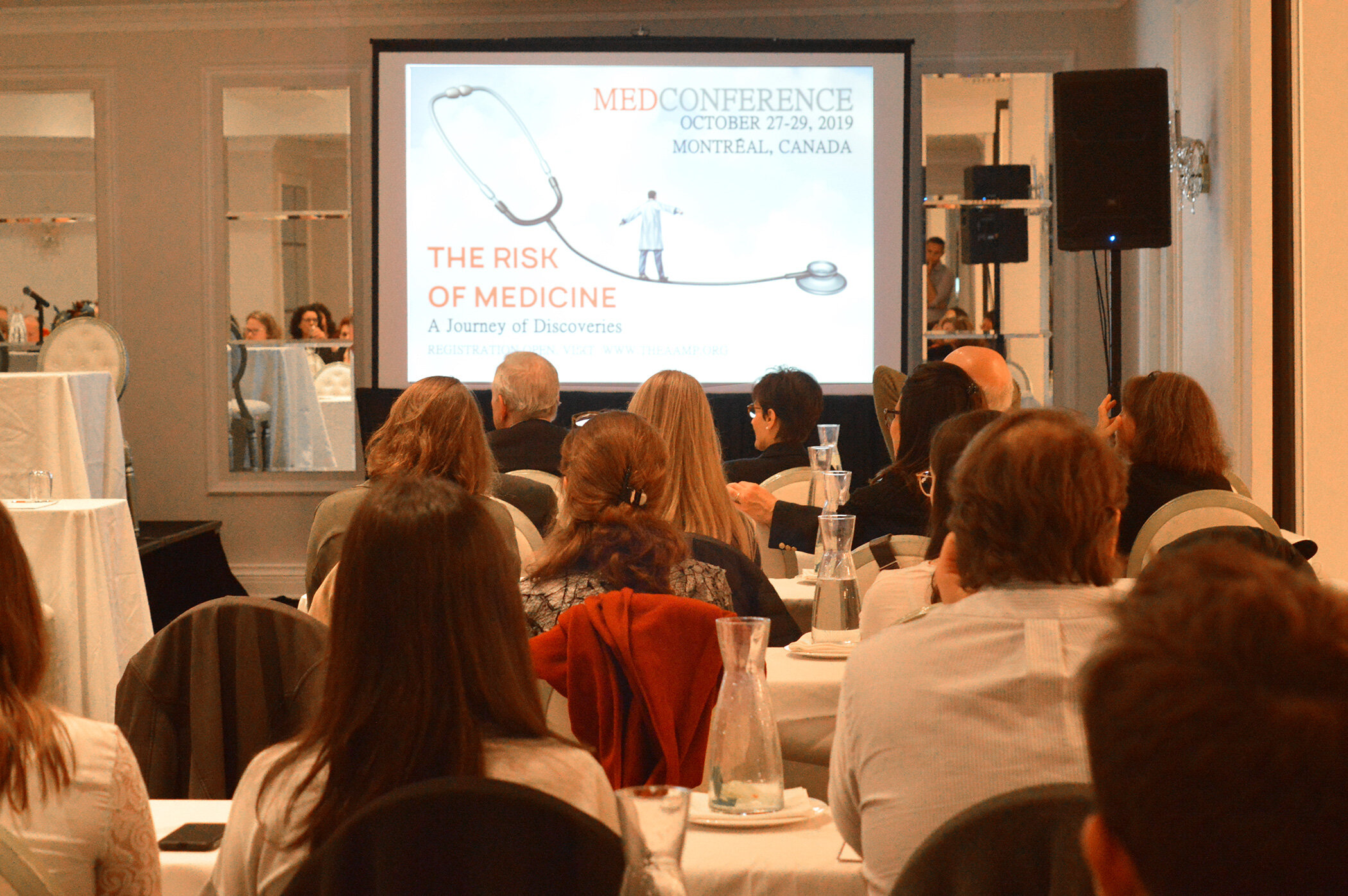
AAMP advances its mission through the ongoing planning and delivery of its flagship annual MedConference, established in 2009 and continually evolving to meet the needs of today’s healthcare landscape. The MedConference seeks to help renew a healthcare system that integrates cutting-edge scientific and clinical research with a deep attentiveness to the full dignity, needs, and complexity of each patient. Its aim is to foster a more human, person-centered approach to care, one that strengthens both clinical excellence and the lived experience of patients.
The conference serves as a dynamic educational forum for students, trainees, and healthcare professionals at all stages, offering an opportunity to rediscover and sustain the ideals that first inspired their vocation in medicine. Through this experience, participants are invited to deepen both their professional formation and their humanity in practice.
Through panel discussions, keynote lectures, case-based sessions, and other scientific programming, AAMP creates a space for meaningful dialogue, interdisciplinary exchange, and continuing education. In doing so, it contributes to the ongoing formation of a healthcare community committed to rebuilding and advancing truly person-centered care.
The American Association of Medicine and the Person (AAMP) was established on May 10, 2011, as a (501)(c)(3) not-for-profit public benefit corporation according to the laws of the State of New York.
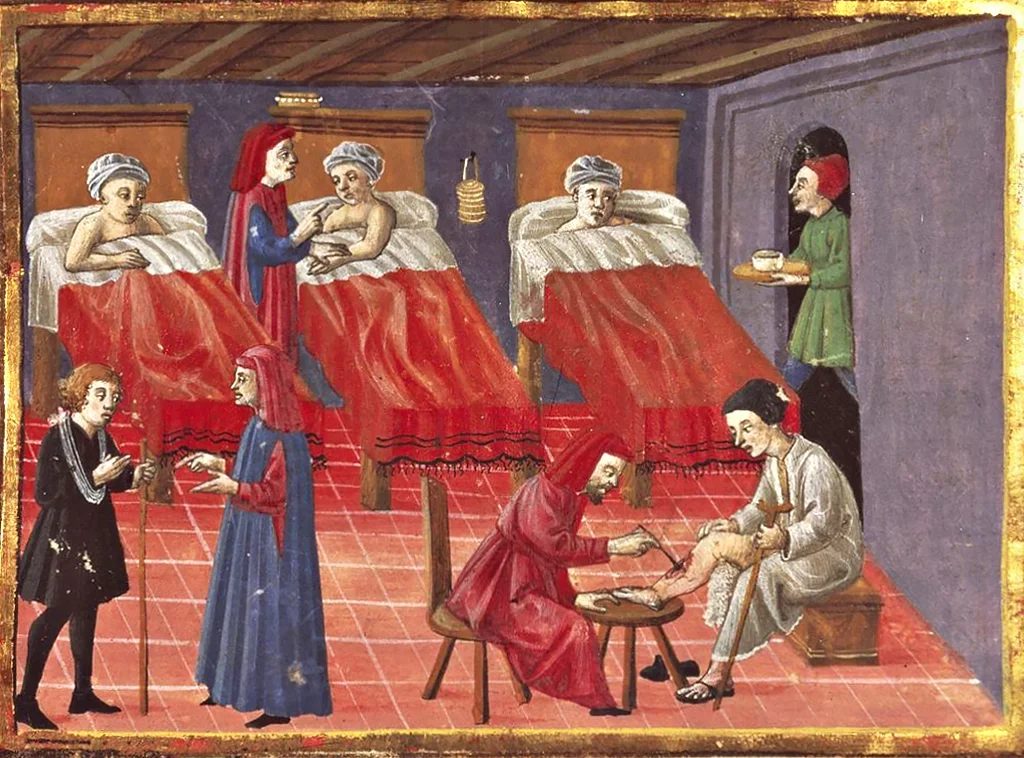
Hospital, Codice Squarcialupi, XV century; Biblioteca Laurenziana, Florence, Italy
To cure sometimes, to relieve often, to comfort always
From the very beginning, the art of medicine has been, at its core, about comforting the patient.
Even today, in a highly technological era, when many illnesses can be cured, pain can often be effectively relieved, and organ transplantation, gene editing, and other high-tech interventions are a real possibility, patients still need to be comforted.
They need comfort to face the reality of a diagnosis, to endure the side effects of treatment, to sustain hope, and, ultimately, to live the time of illness as a meaningful part of their lives.
It is striking that the word comfort derives from the Latin cum fortis—“with strength.” Its meaning points to a relationship (cum = together; fortis = strong) through which a person can receive strength. This captures something essential about the bond between caregiver and patient.

The core of the medical profession—the relationship between patient and caregiver—is too often reduced to a mechanical process. In this way, the very nature of medical care is put at risk, as the care of the patient is limited to the treatment of his or her physical condition alone.
Yet in the face of illness and death, patients inevitably confront profound questions, regardless of the outcome of their particular situation: Will I be healed? What is the meaning of this illness? Why are there pain and death? Medical professionals, too, face equally pressing questions: Why is it worthwhile to be a doctor or a nurse today? What lies at the heart of being a truly human healthcare professional? What is it that a patient ultimately asks of a caregiver?
The MedConference proposes that the mission of the medical profession encompasses three essential objectives: to cure the patient, or at least to prevent disease progression; to care for the patient by alleviating associated symptoms, especially in advanced stages; and to comfort the patient by attending to the full range of their needs and expectations.